
This might sound surprising coming from a law firm, but here’s a truth most people in our industry will not say: You don’t always need a VA disability attorney.
In many cases, hiring a lawyer too early in the process can slow you down or cost you money when you do not need to spend it. If you’re a veteran getting ready to file a claim, here’s how to figure out what kind of help you need.
1. If your claim is straightforward, start simple.
If your condition is clearly documented in your military service records, or if you qualify for a presumptive condition, you’re already in a great position.
For example, if you injured your back on active duty, were treated at the base clinic, and still have back pain today, the VA likely has enough evidence to grant service connection. You can file an initial claim online by yourself. Many veterans successfully receive their benefits this way without ever needing to hire outside help. You can always get help later if the VA makes a mistake.
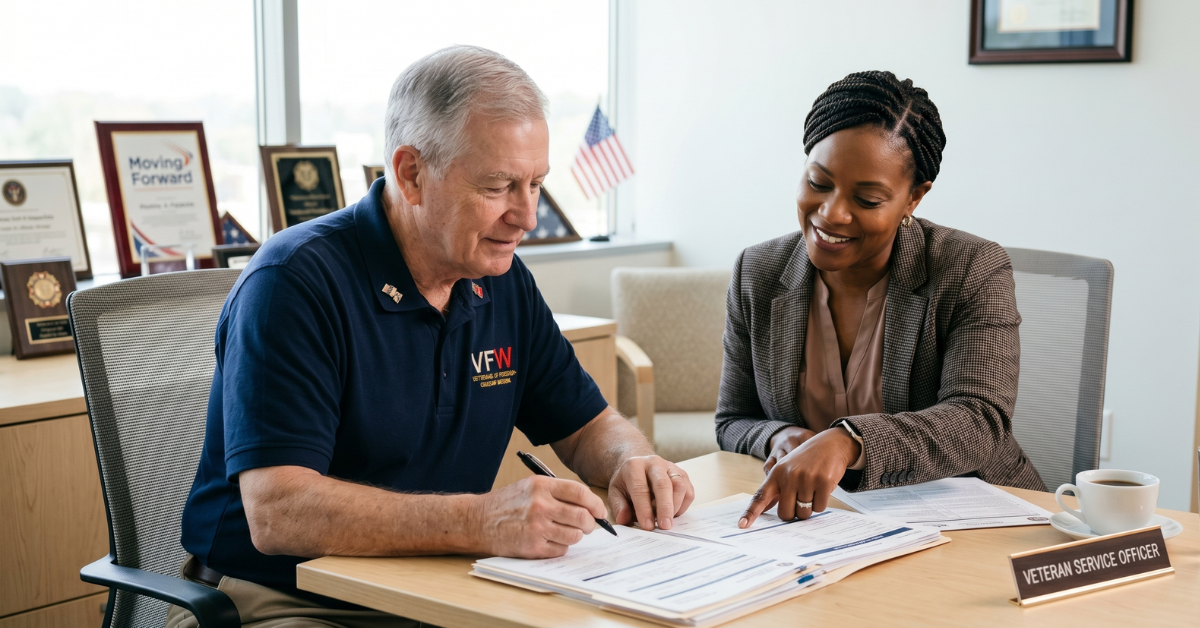
2. Use a VSO before hiring an attorney.
If you need help filing that first claim, a Veterans Service Organization (VSO) is often your best starting point. The VA recognizes VSOs as accredited representatives who are trained to help you gather evidence and file initial claims.
You can find VSOs through organizations like the Disabled American Veterans (DAV), Veterans of Foreign Wars (VFW), or even your local county government. The best part is that their services are completely free. For a standard initial claim, a VSO is usually all you need.
3. Proceed with caution when considering unaccredited professionals.
If someone guarantees you a 100% rating, asks for upfront fees, or pressures you to sign a contract quickly, walk away.
You should only ever work with recognized professionals: VSOs, VA-accredited attorneys, or VA-accredited claims agents. Unaccredited individuals cannot legally represent you before the VA. The biggest issue with using unaccredited help is the structure and amount of the fees they charge. For instance, they often charge fees for filing initial claims, which is explicitly prohibited by the VA. Furthermore, they frequently try to take a cut of your future monthly benefit checks.
Accredited attorneys, by law, cannot charge you upfront fees and are paid a regulated percentage of your back pay only if you win. Choosing the wrong help can end up costing you thousands of dollars in the long run.
4. If you’re filing an appeal, call an attorney.
Attorneys and claims agents typically step in to help with appeals. You should consider hiring a VA disability attorney when the stakes get higher and the legal rules get more complicated.
This includes:
- Denials with weak or confusing reasoning: When the VA ignores your evidence or misapplies the law.
- Missing service treatment records: When you need help proving an event happened using buddy statements or alternative records.
- Complex medical opinions: When your claim requires an outside doctor to write a nexus letter proving your military service caused your current condition.
- Appeals requiring deep legal strategy: Such as fighting a bad C&P exam in a Higher-Level Review.
- Taking your case to court: Arguing before a Veterans Law Judge at the Board of Veterans’ Appeals or the Court of Appeals for Veterans Claims.
This is where an experienced attorney makes a real difference. If your claim is denied, having legal counsel can completely change the outcome.
Do not go through this alone – Cameron Firm, PC, is here to help.
Even if you’re not planning to hire an attorney right away, having a number to call if you get in a bind is a good idea. The system is complicated, and it’s exhausting to advocate for yourself. Talk to a VSO, a trusted veteran, or an accredited representative who understands the process.
You served, and you sacrificed. You are pursuing benefits you were promised. Do not quit when it gets difficult. Start simple, get the right help when you need it, and stay in the fight.
Remember, you do not have to go through this alone. If your claim has been denied, call Cameron Firm, PC, today to review your legal options.